Claims, Certifications, and Seller's Permits: A CPG Compliance Starter Kit

David Boyle
Jun 2
Early-stage CPG brands often get blindsided by compliance paperwork — this is a deep dive into on-pack claims, third-party certifications, and seller's permits to help you understand what you can say on your package and how to buy ingredients and packaging without paying unnecessary sales tax.
Early-stage CPG brands tend to obsess over flavor, design, and store placement—and then get blindsided by paperwork. Two pieces of compliance come up almost immediately: the question of what you can say on your package, and the question of how to buy ingredients and packaging without paying sales tax. This guide walks through both.
Claims vs. Certifications: Two Different Tools
Brands have two main ways to communicate values and product attributes on a package: on-pack claims and third-party certifications. They look similar to a shopper, but they work very differently behind the scenes.
On-Pack Claims
For many attributes—"Non-GMO," "Gluten-Free," "Plant-Based," "No Added Sugar"—you can make the statement on the package without a third-party certification, as long as the claim is accurate and you can defend it. That means keeping clean records: ingredient specifications, supplier letters, allergen statements, internal test results, and anything else that would let you walk an inspector or retailer through how you arrived at the claim.
Claims are cheap to add and flexible. They are also where brands get into trouble when they cannot back them up. Treat every claim as a promise you might have to substantiate.
Third-Party Certifications
Certifications go further. They require submitting your product, formulation, and facility to an independent organization that audits, tests, and (if you qualify) issues a license to use their seal. The upside is enormous: the seal carries credibility a self-issued claim cannot, and many retailers explicitly favor certified products.
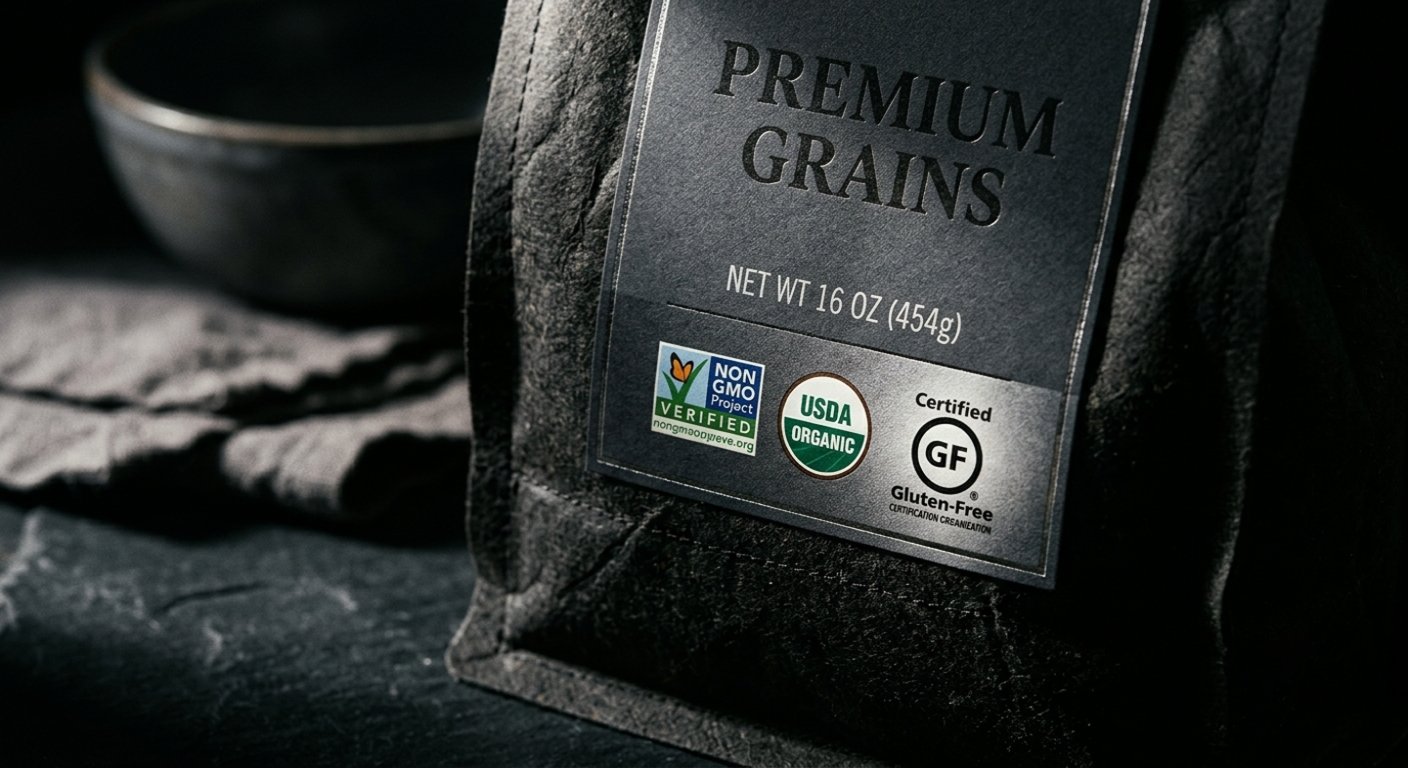
The trade-offs are time and money. Most certifications charge an annual fee in the $1,000–$2,000 range per certification on top of testing and audit costs. Common certifications worth evaluating include Non-GMO Project Verified, USDA Organic, Certified Gluten-Free, Kosher, Vegan, and Whole30 Approved.
A Hybrid Approach Most Brands Use
A common playbook is to launch with on-pack claims wherever possible and then layer in third-party certifications after the first production—once formulation, ingredient suppliers, and packaging are dialed in. The two certifications most brands prioritize first are Non-GMO Project Verified and Kosher (when the formulation qualifies), because they unlock the most retail conversations relative to cost. From there, brands often add Gluten-Free and Plant-Based as supportable on-pack claims, with formal certification reserved for the moments those seals would directly drive sales or shelf placement.
The result is a package that says everything it needs to say, without spending tens of thousands of dollars chasing seals that don't move the needle.
Seller's Permits and Resale Certificates
Once you start buying ingredients, packaging, and components at wholesale, you'll be asked for tax documentation almost immediately. The system has two layers, and understanding both saves a lot of back-and-forth with suppliers.
The Seller's Permit
A seller's permit is your state-issued license to buy and sell products wholesale without paying sales tax at each stop in the supply chain. The idea is that you (the brand) will eventually sell the finished product to an end customer, at which point sales tax is collected and remitted. In the meantime, the permit allows you to purchase tax-free from suppliers.
Think of the seller's permit as the umbrella. Without one, every component you buy is subject to sales tax, which is a real margin hit at scale.
The Resale Certificate
A resale certificate is how you actually apply your seller's permit to a specific supplier. Many packaging companies—and a few ingredient suppliers—require a resale certificate on file before they'll sell to you tax-free. Sometimes the supplier has their own resale-cert template they want you to fill out and sign with your seller's permit number; other times they'll accept a copy of the permit itself.
Practically, this means keeping a clean, easy-to-send PDF of your seller's permit—and being ready to fill out a one-page resale cert per supplier whenever it's requested.
Getting Your Seller's Permit
If you don't already have a seller's permit, you can get one quickly from your state's tax or revenue agency. In California, the application is fast and online—services like FastFilings can also help expedite the process if you'd rather not navigate it yourself. The exact requirements vary by state, but in most cases you'll need your business entity details, federal EIN, and a description of what you'll be selling.
It is one of the most boring pieces of paperwork in CPG. It is also one of the first things any supplier will ask for.
What’s a Rich Text element?
The rich text element allows you to create and format headings, paragraphs, blockquotes, images, and video all in one place instead of having to add and format them individually. Just double-click and easily create content.
- double-click and easily create content.
- double-click and easily create content.
How to customize formatting for each rich text
Headings, paragraphs, blockquotes, figures, images, and figure captions can all be styled after a class is added to the rich text element using the "When inside of" nested selector system.
How to customize formatting for each rich text