Food Certifications Explained: Organic, Non-GMO, Gluten-Free, Kosher, and Vegan

David Boyle
Jun 2
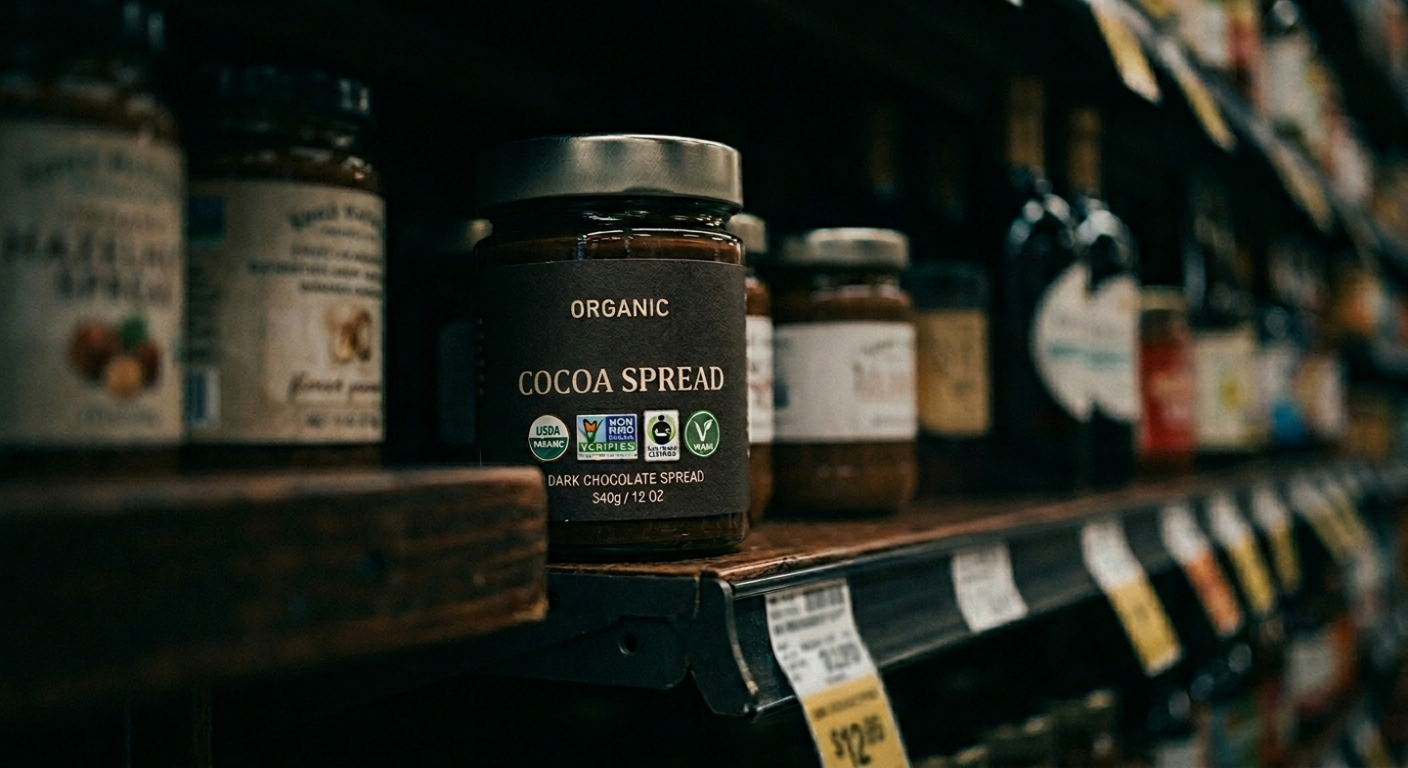
The seals on your package do real work at shelf — this breakdown covers the five certifications you'll encounter most in food and beverage, what each one actually requires, and how to use them alongside on-pack claims to build consumer trust without overspending on fees.
When a shopper grabs a product off the shelf, the seals on the front of the package do real work. They build credibility in seconds, signal alignment with a lifestyle or value, and often decide whether the box ends up in the cart. For consumer packaged goods (CPG) brands, choosing which certifications to pursue—and understanding how they differ from on-pack claims—shapes everything from formulation costs to retailer conversations to consumer trust.
This guide breaks down the five certifications you will hear about most often in food and beverage, what each one actually requires, and how brands use them alongside marketing claims.
Organic Certification
Organic certification is one of the most rigorous third-party programs in food. In the United States, the USDA National Organic Program (NOP) sets the standards and oversees the certifiers. To label a product as organic, producers must develop an Organic Systems Plan, document their inputs and processes, and pass annual inspections.
The standards prohibit synthetic pesticides, synthetic fertilizers, genetically modified organisms (GMOs), sewage sludge, and irradiation. To carry the "USDA Organic" seal, a finished product must contain at least 95% organically produced ingredients (excluding water and salt), with the remaining 5% drawn from an approved national list.
Organic certification typically increases ingredient cost and supply-chain complexity, but it unlocks placement in natural retail and resonates strongly with consumers who prioritize how ingredients are grown.
Non-GMO Project Verified
The Non-GMO Project is North America's most recognized non-GMO label. Verification is administered by independent technical administrators who evaluate ingredients, audit production, and—for higher-risk ingredients like corn, soy, and canola—require ongoing testing.
Importantly, Non-GMO Project Verified is not the same as organic. Organic products avoid GMOs by definition, but many conventionally grown ingredients can also qualify. For brands that want to make a clear non-GMO statement without taking on the full cost of organic, the butterfly seal is the most trusted shortcut.
Gluten-Free Certification
Gluten-free certification confirms that a product meets a defined threshold for gluten content—typically less than 20 parts per million (ppm), which aligns with the FDA's threshold for using the term "gluten-free" on a label. Programs like the Gluten-Free Certification Organization (GFCO) and the Gluten-Free Food Program audit facilities and require regular testing to maintain the mark.
For shoppers with celiac disease or non-celiac gluten sensitivity, a third-party seal is a faster trust signal than reading the ingredient panel. For brands manufacturing in shared facilities, certification also forces good cross-contamination controls that benefit overall quality.
Kosher Certification
Kosher certification verifies that a product complies with Jewish dietary laws (kashrut). That includes everything from ingredient sourcing and equipment usage to the separation of meat and dairy. Certification is granted by a kosher agency (sometimes called a hechsher), and several major agencies—OU, Star-K, OK, and others—are widely recognized by retailers and consumers.
Kosher certification is one of the lower-friction certifications to add: the audit process is well established, ongoing fees are predictable, and the symbol opens distribution to a meaningful consumer base well beyond observant Jewish households. Many shoppers read a kosher mark as a general quality and traceability indicator.
Vegan Certification
Certified Vegan products contain no animal-derived ingredients—no meat, fish, eggs, dairy, honey, gelatin, or insect-derived dyes—and have not been tested on animals at any stage of production. Certification is granted by independent organizations such as Vegan Action and BeVeg.
For brands serving plant-based shoppers, a vegan seal removes ambiguity. Even products that look obviously plant-based can contain unexpected animal-derived processing aids; the certification removes that doubt and supports a premium price point in many categories.
Claims vs. Certifications: What's the Difference?
Certifications and claims often look similar on a package, but they work differently behind the scenes.
What Counts as a Claim
A claim is a statement the manufacturer makes about the product on the package or in marketing—nutritional ("high in fiber," "low sugar"), health-related ("supports heart health"), or values-based ("sustainably sourced," "plant-based"). Claims must comply with FDA and FTC rules, which means they need to be accurate, not misleading, and—where applicable—substantiated with scientific evidence or documentation.
Claims are powerful because they are flexible and free. As long as you can defend them, you can use them. They are also risky if your records and supplier documentation cannot back them up.
What Counts as a Certification
A certification is a formal endorsement issued by an independent third party that verifies the product meets a defined standard. Certifications carry credibility precisely because the brand cannot self-issue them. They almost always require an application, an audit, ongoing testing or inspections, and an annual licensing fee (commonly in the $1,000–$2,000 range per certification, plus testing costs).
Certifications are slower and more expensive to put on the package than claims, but the third-party seal gives retailers and shoppers a level of trust a claim cannot match.
How Brands Use Them Together
Most experienced CPG brands use a hybrid strategy. They pursue certifications that materially expand retail access or warrant a price premium—commonly USDA Organic, Non-GMO Project Verified, and Kosher—and they make supportable on-pack claims for the rest. A typical playbook is to launch with the highest-impact certifications, then layer in additional claims like "gluten-free," "plant-based," or "no added sugar" after the first production run, once formulation and supplier documentation are dialed in.
The result is a package that earns trust at first glance while keeping ongoing certification fees focused where they drive measurable revenue.
What’s a Rich Text element?
The rich text element allows you to create and format headings, paragraphs, blockquotes, images, and video all in one place instead of having to add and format them individually. Just double-click and easily create content.
- double-click and easily create content.
- double-click and easily create content.
How to customize formatting for each rich text
Headings, paragraphs, blockquotes, figures, images, and figure captions can all be styled after a class is added to the rich text element using the "When inside of" nested selector system.
How to customize formatting for each rich text